ABOUT US
Adhering to the spirit of "dedication and focus", we provide craftsmanship products and serve millions of users

HOME
ABOUT US
PRODUCTS
Case
plan
NEWS CENTER
contact us
CHINESE
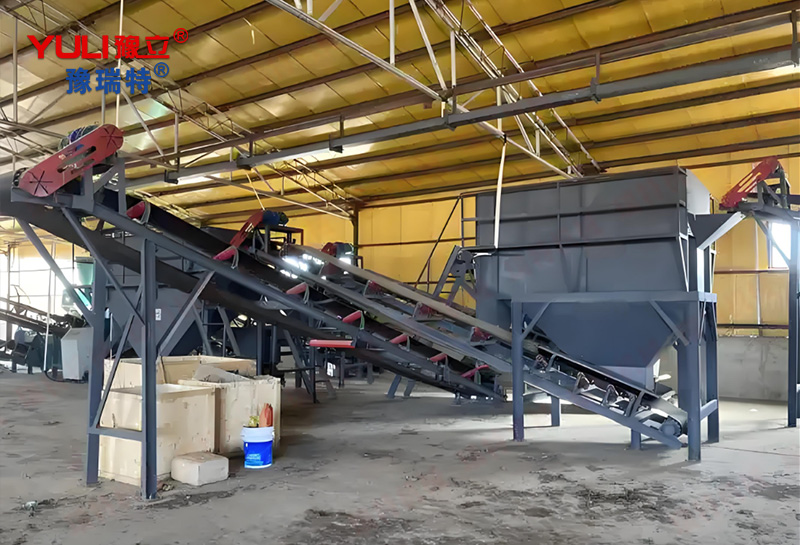
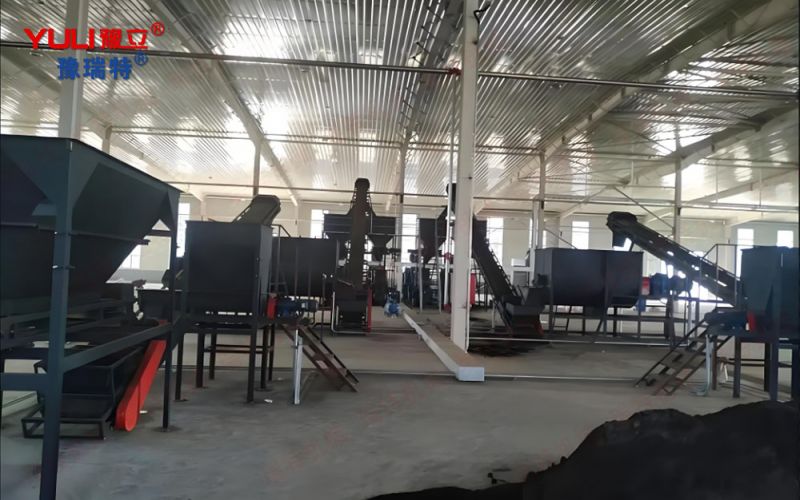
Organic fertilizer production line
13523220009
1、 Project Overview and Core Values
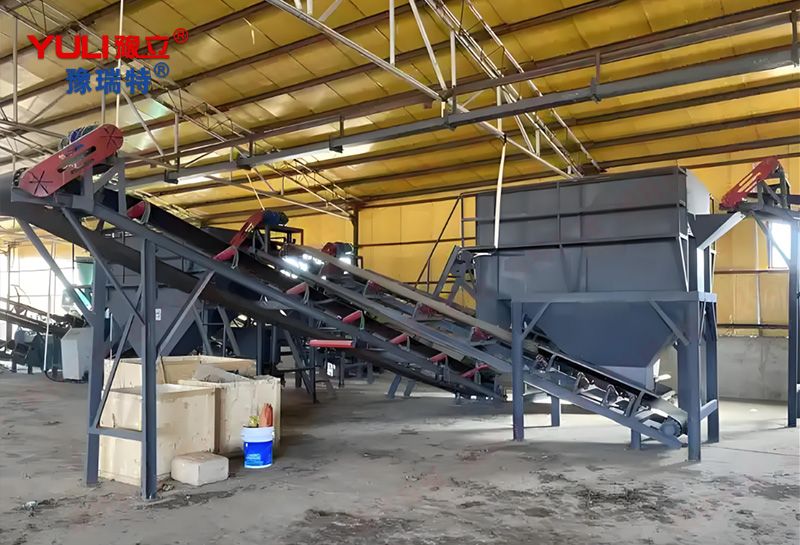
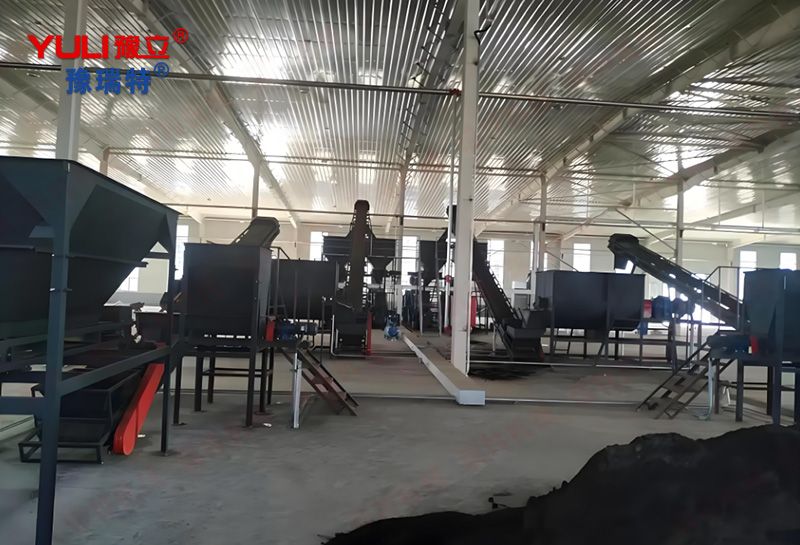
The aim of this project is to construct a production line for powdered organic fertilizer with an annual output of 10000 tons. Through standardized and mechanized treatment processes, organic waste such as livestock manure, crop straw, and urban sludge will be converted into high-quality powdered organic fertilizer.
Project positioning and market: With an annual production capacity of 10000 tons, it is an ideal choice for medium-sized agricultural and animal husbandry enterprises, regional environmental protection companies, or professional fertilizer producers to invest. It has economies of scale and can effectively cover a prefecture level market.
Wide adaptability of raw materials: The core process is suitable for the harmless treatment and resource utilization of various organic solid wastes such as cow manure, sheep manure, pig manure, chicken manure, sludge, rice straw, corn straw, etc.
Core values:
Economic benefits: turning waste into treasure, creating significant product profits, low raw material costs, and reasonable return period.
Environmental benefits: Addressing the issue of waste disposal in large-scale aquaculture and urban waste management, in line with national environmental policy guidance.
Agricultural benefits: The organic fertilizer produced can improve soil structure and enhance crop quality, which is an important guarantee for the development of green and organic agriculture.
2、 Detailed explanation of core process flow
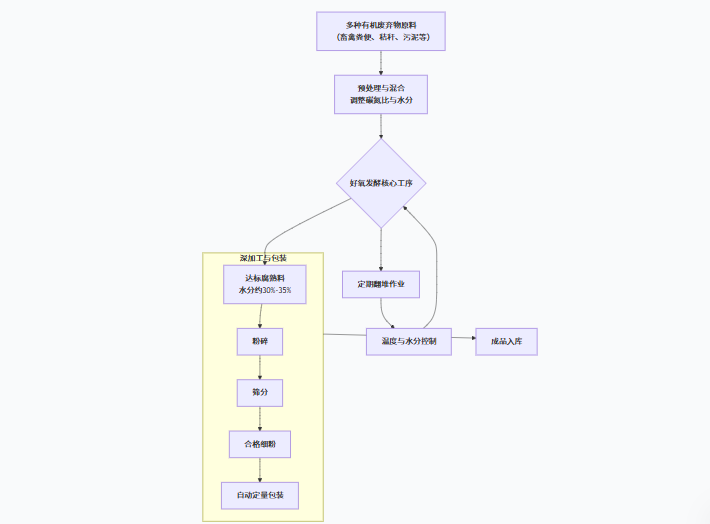
The entire production line follows the scientific process of "fermentation and maturation → crushing and screening → packaging and storage" to ensure the safety, stability, and efficiency of the products.
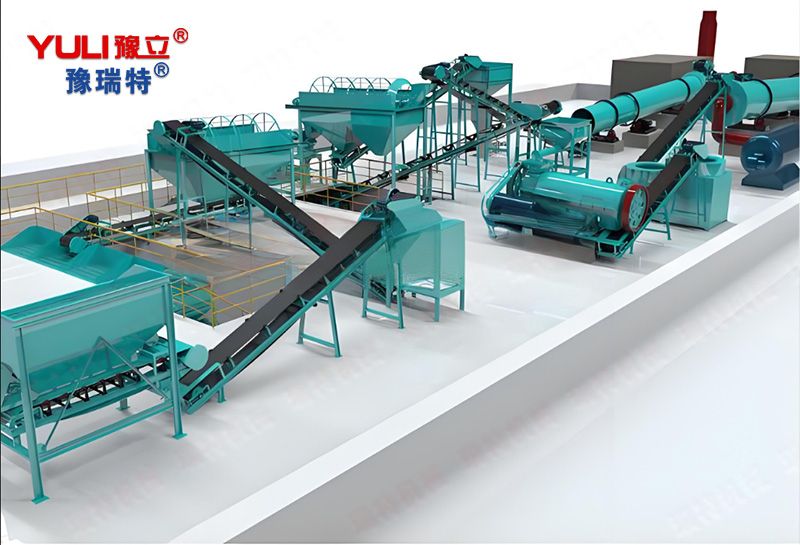
Flowchart: Production process of 10000 tons of powdered organic fertilizer per year
1. Preprocessing and mixing ratio
Mix the collected main materials such as feces and straw with auxiliary materials (such as microbial agents and conditioners) in scientific proportions. The goal is to adjust the carbon to nitrogen ratio of the initial material to 25-35:1 and control the moisture content at 55% -65%, creating optimal conditions for subsequent aerobic fermentation. This process can be completed with the help of a shovel or premix equipment.
2. Aerobic fermentation and maturation (core process)
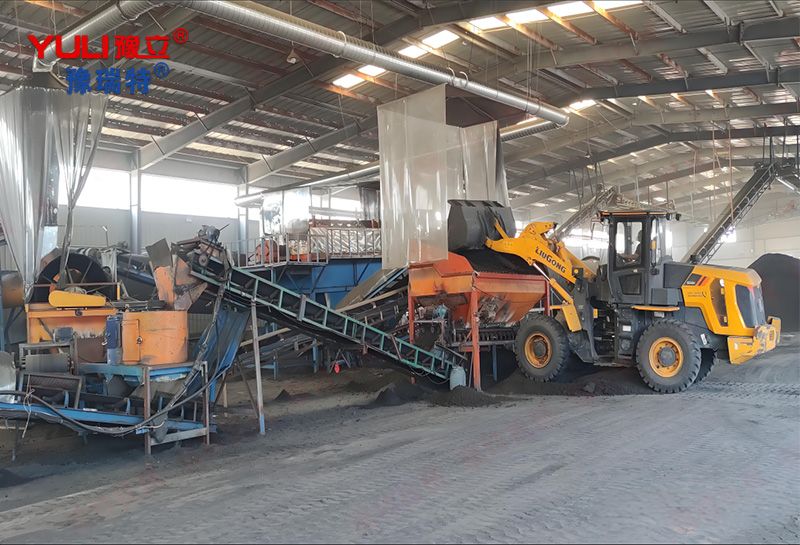
This is a crucial step in determining the quality and safety of fertilizers. The mixed materials are sent into the fermentation tank, and under the action of the "tank type stacker", the materials are regularly and evenly flipped and thrown.
Mechanism of action: Injecting oxygen into the material by flipping it over promotes the proliferation of aerobic microorganisms. The temperature of the material quickly rises above 55 ℃ and is maintained for 5-7 days, effectively killing pathogens, insect eggs, and grass seeds, achieving harmless treatment. At the same time, organic matter is decomposed and converted into stable humus.
Process control: The fermentation cycle is usually 15-25 days, and the moisture content of the material can be reduced to 30% -35% after fermentation is completed.
3. Deep processing and packaging
The decomposed materials enter the processing workshop.
Crushing: A chain crusher is used to crush block shaped clinker, ensuring uniform particle size and easy subsequent processing and application.
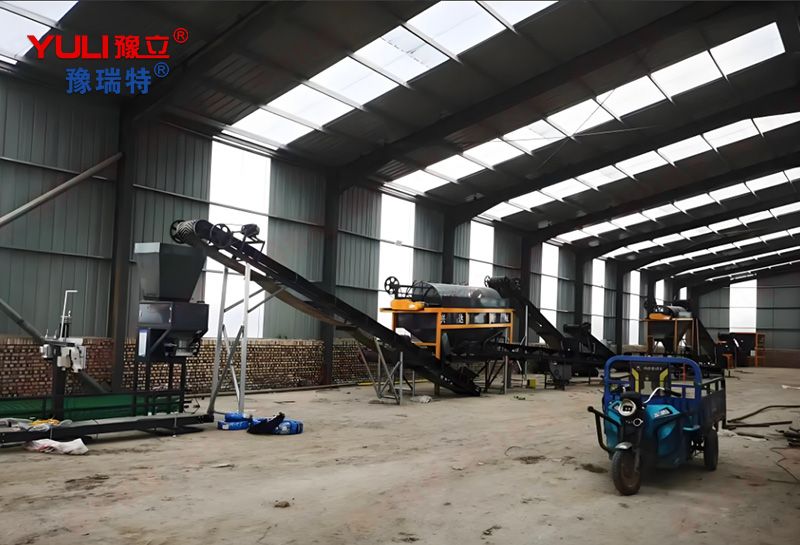
Screening: The crushed material is classified by a drum screening machine, and the qualified fine powder enters the next stage as the finished product, while the coarse material is returned for re crushing to ensure consistent product fineness.
Packaging: The finished powdered fertilizer is transported by a conveyor to a fully automatic quantitative packaging machine, where it is accurately measured (usually 20kg/bag or 40kg/bag) and sealed before being stored or sold.
3、 List of Key Equipment Selection and Configuration
Equipment is the backbone of the production line. The following configuration is designed specifically for an annual output of 10000 tons to ensure production capacity and quality. Among them, the selection of turntables and crushers is particularly crucial for overall efficiency.
| 序号 | 设备名称 | 推荐型号/规格 | 核心功能与技术要点 | 数量(台) | 建议功率 (kW) |
|---|---|---|---|---|---|
| 1 | 履带翻堆机 | YULI-2500 | 发酵核心设备。负责翻抛供氧、散热、匀质。需采用重型底盘和耐用拨齿,以应对长期高负荷作业。 | 1 | 18.5+0.75 |
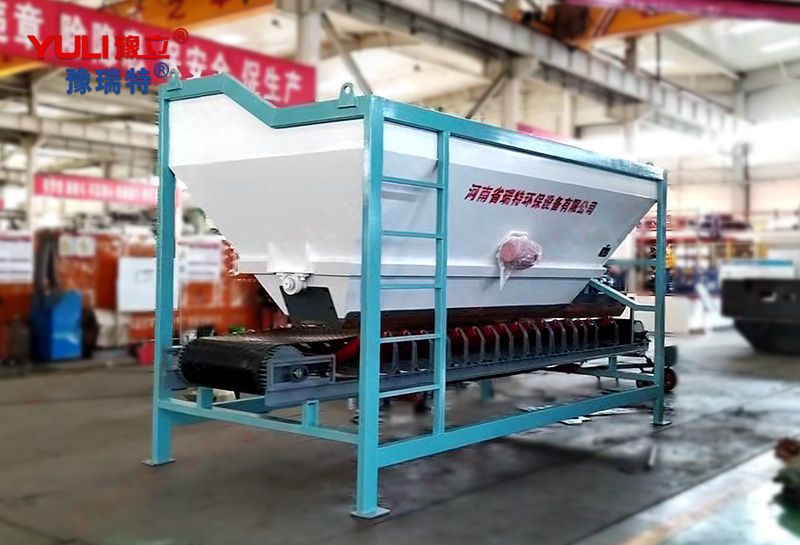
| 2 | 铲车料仓 | CWL1530 | 缓存与均匀给料。置于粉碎机前,确保连续生产,并配有破拱装置解决物料架桥问题。 | 1 | 3+2.2 |
| 3 | 粉碎机 | LF360 | 深加工关键设备。对腐熟料进行破碎,其链式结构不易粘壁,特别适合湿度较大的有机物料。 | 1 | 18.5 |
| 4 | 滚筒筛分机 | GT-2 | 产品分级。分离成品与返料,提升产品外观一致性。筛网应便于更换。 | 1 | 3 |
| 5 | 自动包装机 | ZB-6 | 成品定量包装。高精度传感器保证计量准确,“快、中、慢”三档下料确保包装速度与精度。 | 1 | 0.92 |
| 6 | 皮带输送机 | S-5 | 物料传输纽带。连接各工序,形成流水线。需根据工艺布局确定长度(如3条30米)。 | 3 | 9(合计) |
| 7 | 控制柜 | - | 系统集中控制。实现一键启停,并对主要电机进行过载、缺相保护。 | 1套 | - |
Explanation: In the above equipment configuration, it is recommended to use national standard products for core components such as motors and reducers, and clarify with the supplier the warranty period for key equipment (such as turntables and crushers) (3 years if not damaged by human factors) to ensure long-term stable operation.
4、 Feasibility analysis and investment benefits of the project
1. Market and policy feasibility
Market demand: With the increasing demand for soil improvement and the improvement of agricultural product quality, there is a huge market space for high-quality organic fertilizers.
Policy Dongfeng: The government has clear financial subsidies and tax incentives to support projects such as the resource utilization of livestock and poultry manure and the comprehensive utilization of straw.
2. Economic benefit analysis (estimate)
Investment estimation:
Equipment investment: The core equipment investment for the complete production line mentioned above is approximately 450000 to 650000 yuan.
Civil engineering investment: including fermentation workshop (sunroof or enclosed), processing workshop, warehouse, etc., requiring approximately 300000 to 500000 yuan.
Total investment: usually between 800000 and 1.2 million yuan, depending on the degree of automation and factory standards.
Costs and benefits:
Production cost: mainly includes raw materials, electricity, labor, bacterial strains, packaging bags, etc., with a comprehensive cost of about 350-500 yuan/ton.
Sales revenue: Calculated based on the average market price of 600-850 yuan/ton for powdered organic fertilizer, with an annual output of 10000 tons, the annual output value can reach 6-8.5 million yuan.
Profit analysis: The annual gross profit is approximately 2.5-3.5 million yuan. Under good business conditions, the static investment payback period is about 2-3 years.
3. Environmental Protection and Social Benefits
The project itself is a typical environmental protection project that can effectively solve the problem of regional organic waste pollution.
The product can improve soil, reduce fertilizer usage, and has good ecological cycling benefits.
4. Potential risks and countermeasures
Raw material supply risk: Long term and stable raw material storage and transportation agreements need to be established with surrounding breeding farms and planting bases.
Product quality risk: Establish strict production process monitoring (especially fermentation temperature and time) and factory inspection system.
Market sales risk: In the initial stage, the "demonstration field+agricultural technology service" model can be adopted for promotion, actively connecting with channels such as cooperatives and family farms.
Mainly engaged in core products such as slatted board production lines and slatted board molds
Strong strength · Excellent equipment · Quality assurance · Customer first · Win-win cooperation
CONTACT:Manager Li 13523220009
TEL:0373-7774868
ADDRESS:South of the middle section of Weiqi Road, Xinxiang Economic and Technological Development Zone
 Follow us
LINK:
Xinxiang Ruite Machinery Co., Ltd ICP:豫ICP备10026059号-2
13523220009
扫一扫 关注我们