ABOUT US
Adhering to the spirit of "dedication and focus", we provide craftsmanship products and serve millions of users

HOME
ABOUT US
PRODUCTS
Case
plan
NEWS CENTER
contact us
CHINESE
Production line components
13523220009
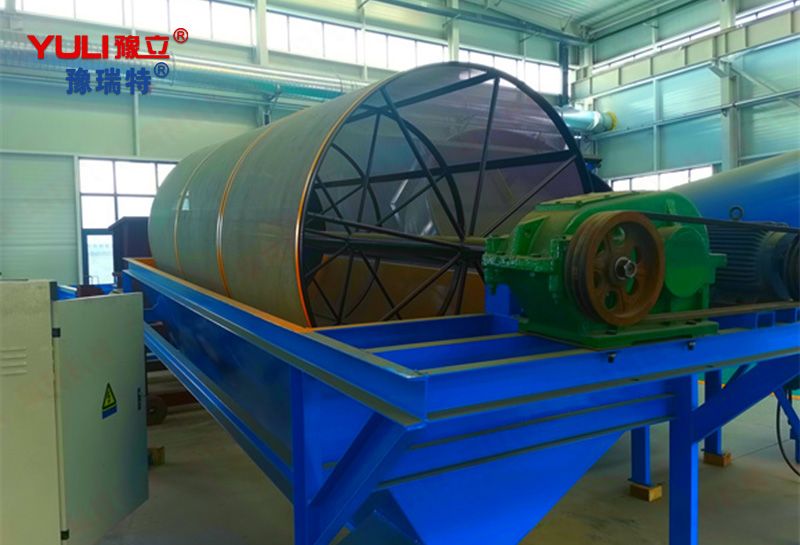
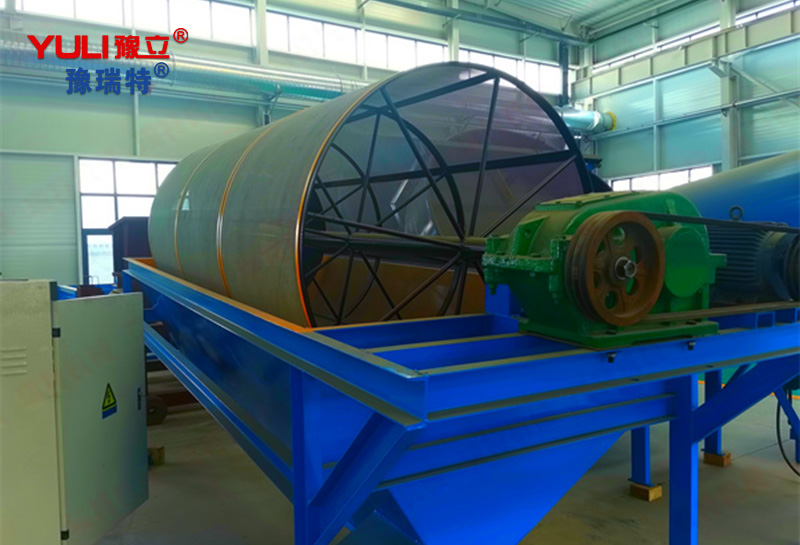
Drum screening machine, also known as rotary screen or rotary drum screen, is a mechanical equipment that uses the rotation of the drum to classify and screen materials based on their particle size. In the organic fertilizer production line, it is mainly deployed in the post fermentation or granulation process, used for fine grading and impurity separation of finished or semi-finished products.
1、 Core structure and working principle
Main structure: a cylindrical or prismatic sieve tube installed at an angle of inclination (usually 5 ° -10 °).
Sieve layering: The interior of the sieve cylinder is divided into several sections along the axial direction, each section containing a sieve with a different aperture. The aperture decreases from the feeding end to the discharging end in sequence (e.g. large aperture → medium aperture → small aperture).
Working Principle:
Rotation and lifting: The motor drives the sieve cylinder to rotate at a constant speed through a reducer. The inner wall of the cylinder is usually equipped with a lifting plate or a guide plate, and as it rotates, the material is lifted to a certain height.
Throwing and screening: The lifted material falls under the action of gravity, and during the falling process, particles smaller than the aperture of the sieve pass through the sieve and fall into the collection hopper below, achieving classification.
Forward and discharge: Due to the inclination angle of the sieve cylinder, the material that has not been sieved continuously rolls and moves forward inside the cylinder, eventually being discharged from the end (becoming large particles or impurities).
Cleaning and anti clogging: The continuous rotation of the drum and the scattering of materials have a self-cleaning effect, which can effectively prevent the screen from clogging.
2、 Main applications in organic fertilizer production lines
Initial screening of raw materials after fermentation: removing impurities such as incompletely decomposed large blocks of raw materials, stones, plastics, sawdust, etc., to obtain uniform decomposed clinker, which is convenient for subsequent crushing and granulation.
Fine grading of finished fertilizers:
Powdered organic fertilizer: Screen out powder fertilizers of different fineness to meet the needs of different customers.
Granular organic fertilizer: After granulation, drying, and cooling, the particles are divided into qualified products (such as 2-4mm), large particles (returned to crushing), and powder (returned to granulation). This is a key step to ensure the appearance and quality of the finished product.
Pre sorting before composting: used in urban sludge and household waste composting projects to separate large-sized non compostable materials.
3、 Highlight features and advantages
Smooth operation and large processing capacity: With a sturdy structure, it can run continuously for 24 hours and is suitable for large-scale production lines.
High screening efficiency and precise grading: multi-stage screen design, one rotation can separate multiple specifications, resulting in high output.
Strong adaptability and resistance to harsh working conditions:
Can handle organic fertilizer materials with high moisture content (usually<30%) and certain viscosity.
Not sensitive to material impact, sturdy and durable.
Good anti blocking performance, easy maintenance: Strong self-cleaning ability, and open design of the equipment, convenient for cleaning and maintenance. Replacing the screen mesh is relatively easy.
Sealed design, environmentally friendly: The fully enclosed structure effectively controls the dust generated during the screening process and improves the workshop environment.
4、 Key technical parameters and selection points
The size of the sieve cylinder: diameter (ranging from Φ 600 to Φ 2000mm) and length (over 1.5-6 meters) determine the processing capacity.
Mesh configuration:
Material: Wear resistant stainless steel wire mesh, manganese steel mesh or polyurethane sieve plate. Organic fertilizers have strong corrosiveness, and 304 stainless steel is the most commonly used choice.
Aperture: Customized according to product standards. For example, the commonly used pore sizes for grading granular fertilizers are 4mm, 3.5mm, 2.5mm, 1mm, etc.
Drive mode: central shaft drive or roller friction drive. Large numbers often use roller type for smoother operation.
Tilt angle and speed: Adjustable tilt angle and variable frequency speed regulation can adapt to the screening needs of different materials.
Supporting system: It is necessary to consider the uniform feeding device (such as star feeder), dust removal duct interface, and conveying equipment for each level of discharge.
5、 Compared to other screening machines
| 特性 | 滚筒筛分机 | 振动筛 |
|---|---|---|
| 筛分原理 | 旋转、抛洒 | 高频振动、跳跃 |
| 适应物料 | 高湿、粘性、易团聚物料 | 干燥、松散、流动性好的物料 |
| 防堵性 | 优 秀(自清洁) | 一般(对粘性物料易堵网) |
| 分级数量 | 多级(通常3-5级) | 通常1-3级 |
| 噪音 | 较低 | 较高 |
| 维修 | 较简单 | 相对复杂(振动电机需维护) |
For organic fertilizers, which have complex components, high humidity, and are prone to clumping, drum screening machines have become the mainstream and preferred screening equipment in the industry due to their excellent anti clogging, strong adaptability, and stable processing capabilities. Although it appears in the later stage, its "rare" appearance does not refer to its limited application, but may refer to its omission in small or simple production lines. However, in formal and large-scale organic fertilizer production lines, it is a standard configuration and key link to ensure the quality of finished products.
When choosing, it is important to clarify your material characteristics (moisture content, particle composition, yield requirements) with the supplier to ensure that the equipment achieves the best screening effect.
Mainly engaged in core products such as slatted board production lines and slatted board molds
Strong strength · Excellent equipment · Quality assurance · Customer first · Win-win cooperation
CONTACT:Manager Li 13523220009
TEL:0373-7774868
ADDRESS:South of the middle section of Weiqi Road, Xinxiang Economic and Technological Development Zone
 Follow us
LINK:
Xinxiang Ruite Machinery Co., Ltd ICP:豫ICP备10026059号-2
13523220009
扫一扫 关注我们