ABOUT US
Adhering to the spirit of "dedication and focus", we provide craftsmanship products and serve millions of users

HOME
ABOUT US
PRODUCTS
Case
plan
NEWS CENTER
contact us
CHINESE
Compost Turner • Compost Mixer
| span: | 3metre |
| Flipping depth: | 1.5metre |
13523220009
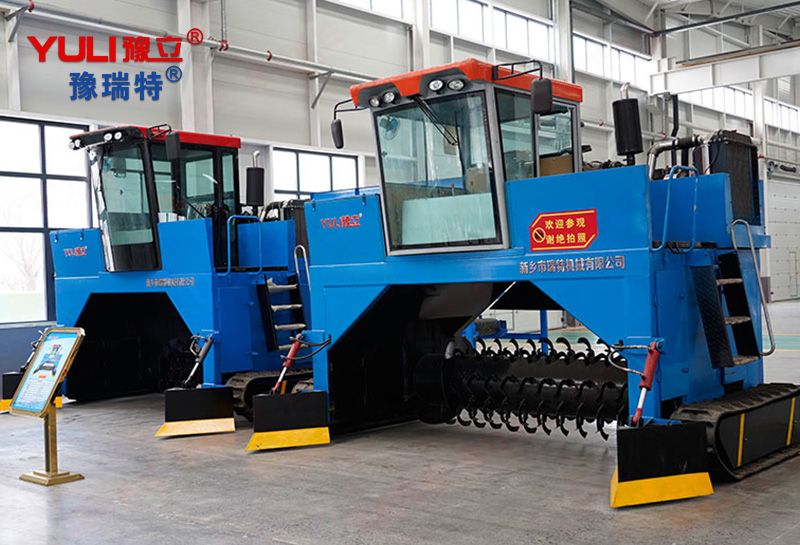
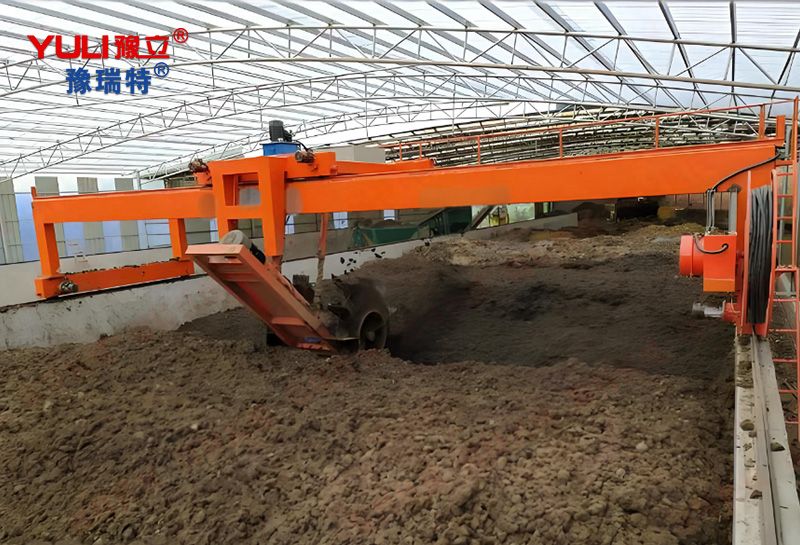
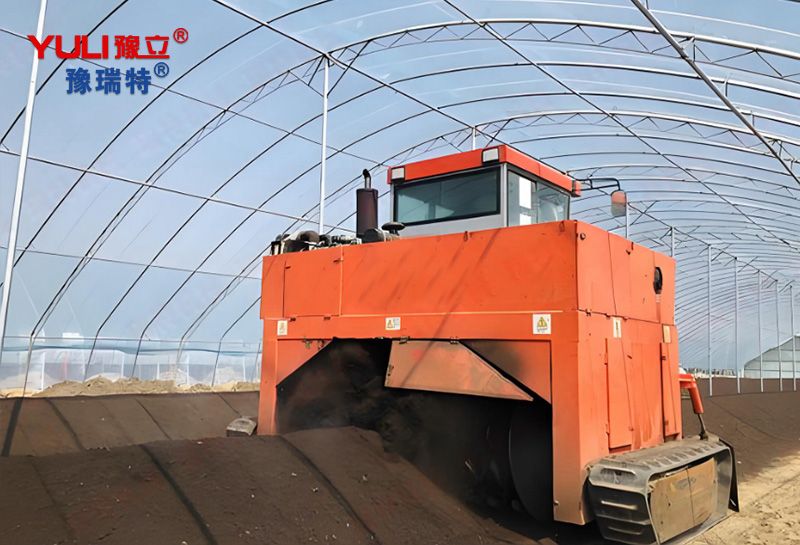
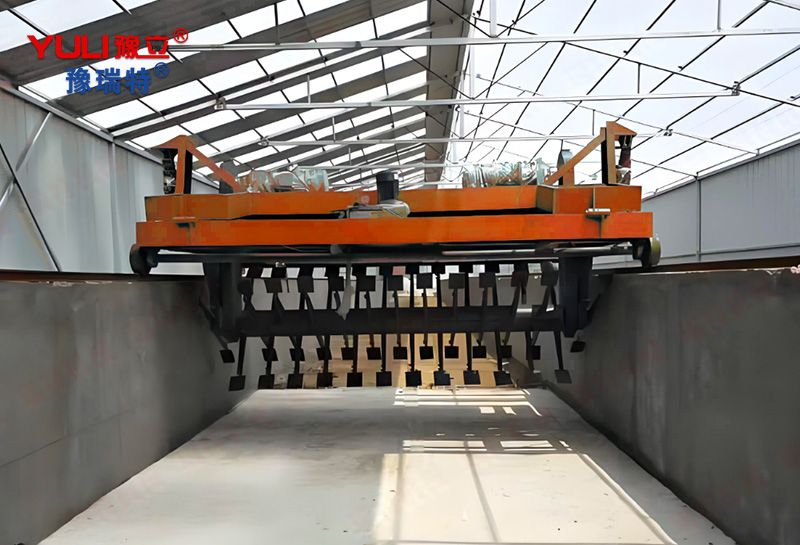
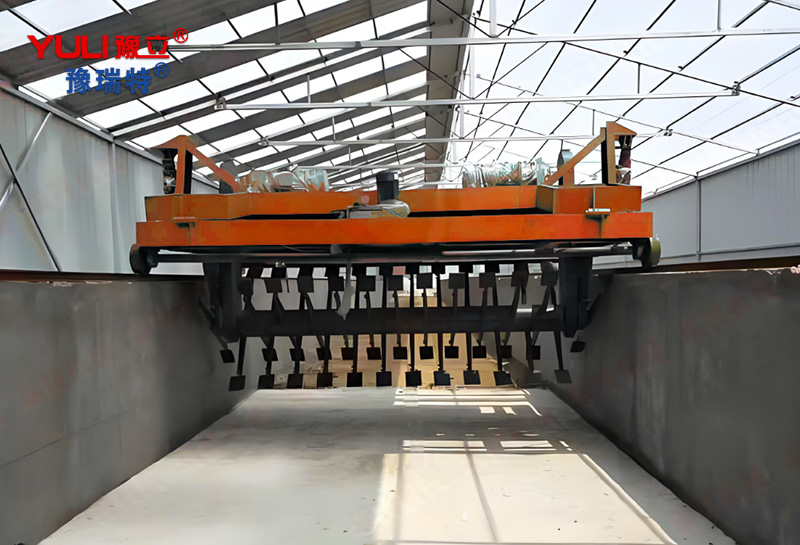
A trough type stacker refers to a specialized machinery that operates in a fixed, usually rectangular concrete fermentation tank (bin) to flip, crush, mix, and displace materials inside the tank. The equipment travels on the track of the groove wall or directly on the groove bottom to achieve continuous operation along the groove length direction.
1、 Main advantages and characteristics
Efficient and continuous industrial processing capability
Factory operation: Materials are fed, flipped, and discharged in batches or continuously in fixed tanks, with clear processes, easy management, and large and stable processing capacity.
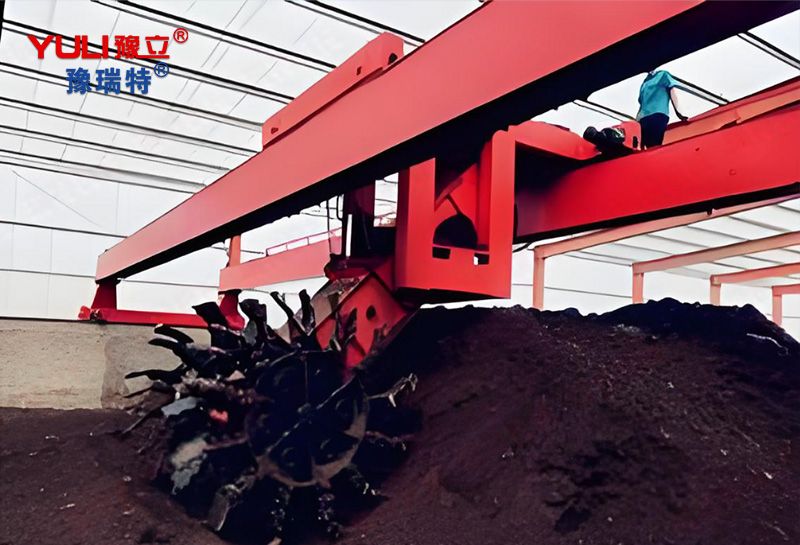
Excellent flipping effect: The equipment has strong power and a deep flipping depth (usually 1.5-3 meters), which can thoroughly disperse and mix the materials evenly, ensuring the uniformity and efficiency of fermentation.
Excellent process control and environmental friendliness
Accurate aeration and temperature control: An aeration pipeline system is usually laid at the bottom of the tank, which can accurately control ventilation based on material temperature and oxygen consumption. This is the key to its fermentation efficiency being much higher than that of natural ventilation stack type.
Environment controllable: The fermentation tank is easy to seal or place in the factory building, and the odor can be collected and treated centrally to avoid secondary pollution; Simultaneously reducing rainwater and climate impact, achieving all-weather production throughout the year.
High degree of automation and intelligence
Easy to implement automation: The equipment can be equipped with functions such as automatic walking, automatic lifting, timed flipping, and remote monitoring, greatly reducing labor costs and intensity.
Data integration: It can be linked with temperature and oxygen sensors to achieve intelligent flipping and ventilation based on data, optimizing fermentation processes.
Relatively intensive land area
Although a trench needs to be built, the use of deep trench design results in high material accumulation and a much larger processing capacity per unit land area than strip stacking, making it suitable for areas with scarce land resources.
Wide adaptability of materials
I am particularly skilled in handling organic solid waste with high moisture content, high viscosity, and easy pollution, such as municipal sludge, kitchen waste, livestock manure, etc. Powerful flipping can effectively break through crusts and mix conditioning agents.
Long service life and stable operation
Running on a fixed track or slot, with stable operating conditions and relatively controllable quipment wear. The core components have strong durability.
2、 Limitations or characteristics that need to be considered
Extremely high initial investment cost
Dual investment in "equipment+civil engineering": not only is the price of the stacker itself expensive (especially the crawler type), but also a large amount of funds need to be invested in the construction of reinforced concrete fermentation tanks, factories, aeration systems, odor treatment systems, etc., with a huge total investment.
Poor flexibility, belonging to fixed facilities
Once built, it cannot be moved. The processing capacity is solidified, making it difficult to cope with significant fluctuations in raw material sources or processing volumes.
The service scope is usually limited to the surrounding area of the factory, and cannot provide regional mobile services like wheeled equipment.
Complex structure, high maintenance technical requirements
The equipment integrates mechanical, hydraulic, and electrical components, and requires professional technicians for maintenance in case of malfunctions.
The aeration holes at the bottom of the tank are prone to blockage and require regular maintenance and cleaning.
There are certain requirements for material pretreatment
To ensure uniform feeding and aeration effect, materials usually need to undergo preliminary crushing, mixing, and conditioning (adjusting moisture and C/N ratio) before entering the fermentation tank.
3、 Main types (based on walking mode)
There are two main types of trough type stackers, and their selection directly affects investment and operational characteristics:
Track type stacker
Features: The equipment rides on concrete tracks on both sides of the fermentation tank.
Advantages: It runs very smoothly and has high flipping accuracy; The device structure is relatively simple.
Disadvantages: Each slot requires a separate device to be configured, or multiple slots share one but require a complex switching system; The requirements for rail construction are high.
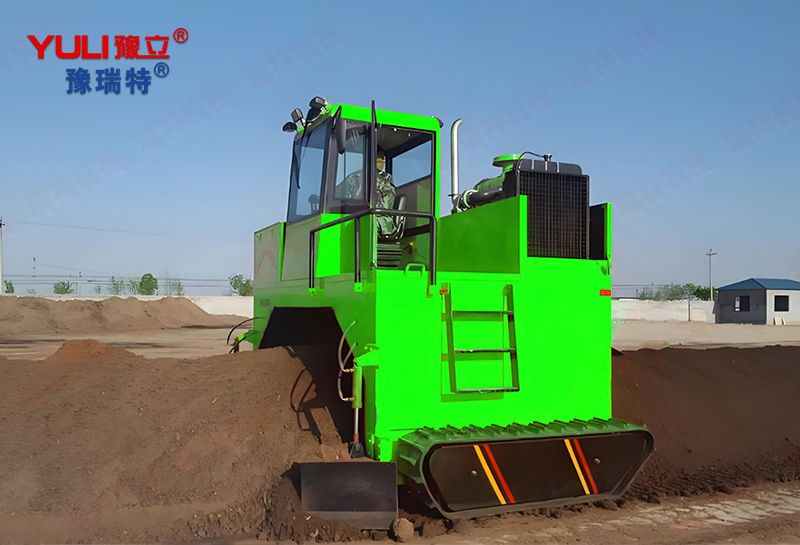
Crawler type stacker (walking on the ground in the trough)
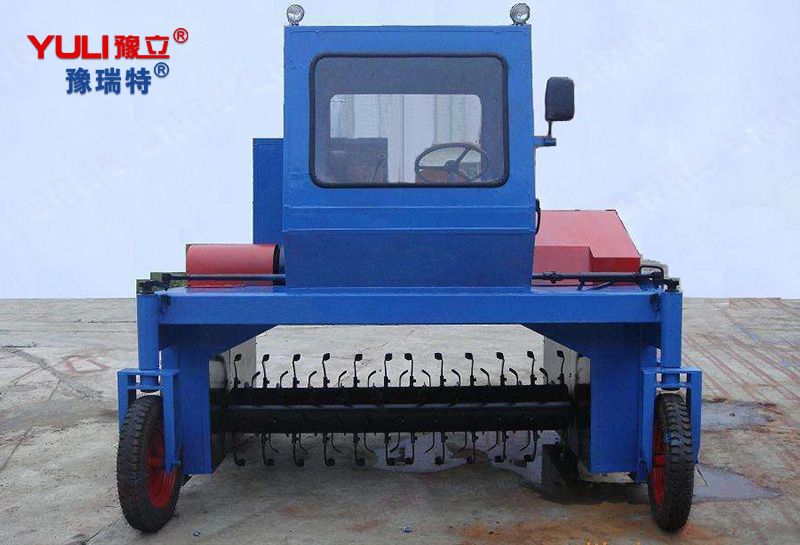
Features: Use heavy-duty rubber tracks to walk directly on the bottom of the groove (such as the previously introduced track type stacker, whose main application scenario is groove type).
Advantages: One device can serve multiple fermentation tanks through tank replacement, with high equipment utilization rate; The requirements for the tank structure are slightly lower.
Disadvantages: The equipment itself is more complex and expensive; The track may cause wear on the bottom of the groove.
4、 Core application scenarios
Municipal Sludge Treatment Center: Harmless and resourceful treatment of sludge from urban sewage treatment plants.
Large scale organic fertilizer factories: standardized and commercialized production of organic fertilizers.
Kitchen waste resource utilization treatment plant.
Centralized fecal treatment center for large-scale aquaculture farms.
Any organic waste treatment project that has strict environmental requirements and requires closed and automated management.
Summary of the essential differences between wheeled (stack type) turning machines and wheeled (stack type) turning machines
| 特性 | 槽式翻堆机(工业化路径) | 轮式翻堆机(分布式/农场路径) |
|---|---|---|
| 工艺核心 | 槽式发酵 + 强制曝气 | 条垛式 + 自然通风 |
| 基础设施 | 投资重 心,需建槽、房、曝气系统 | 几乎无需基建 |
| 空间效率 | 高(立体深槽) | 低(平面条垛) |
| 过程控制 | 精准(温度、氧气、湿度可控) | 粗糙(依赖天气与经验) |
| 环保水平 | 高(易封闭,废气可控) | 低(露天开放) |
| 投资模式 | 高资本投入,低运营人力 | 低资本投入,较高运营人力 |
| 规模经济 | 非常适合大规模集中处理 | 适合中、小规模分布式处理 |
The trough type stacker represents the "heavy asset, high-tech, and industrialized" route for organic waste treatment. Its core characteristics are efficiency, controllability, environmental friendliness, and intensification, but at the cost of high fixed investment and loss of flexibility. It is the preferred technological route for solving urban environmental problems such as sludge and kitchen waste, and building modern organic fertilizer factories. The key to choosing or not lies in a comprehensive balance of processing scale, environmental requirements, investment capacity, and long-term operational goals.
Mainly engaged in core products such as slatted board production lines and slatted board molds
Strong strength · Excellent equipment · Quality assurance · Customer first · Win-win cooperation
CONTACT:Manager Li 13523220009
TEL:0373-7774868
ADDRESS:South of the middle section of Weiqi Road, Xinxiang Economic and Technological Development Zone
 Follow us
LINK:
Xinxiang Ruite Machinery Co., Ltd ICP:豫ICP备10026059号-2
13523220009
扫一扫 关注我们