ABOUT US
Adhering to the spirit of "dedication and focus", we provide craftsmanship products and serve millions of users

HOME
ABOUT US
PRODUCTS
Case
plan
NEWS CENTER
contact us
CHINESE
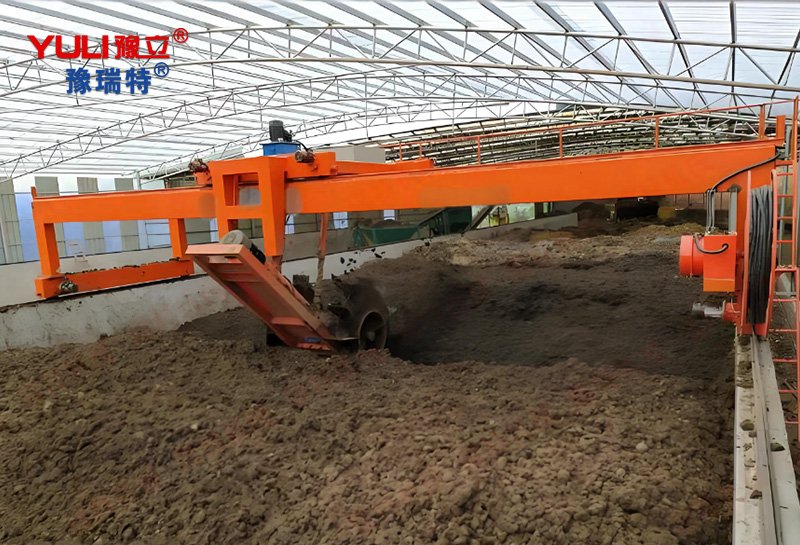
Compost Turner • Compost Mixer
| Flipping depth: | 2-3metre |
| span: | 20metre |
13523220009
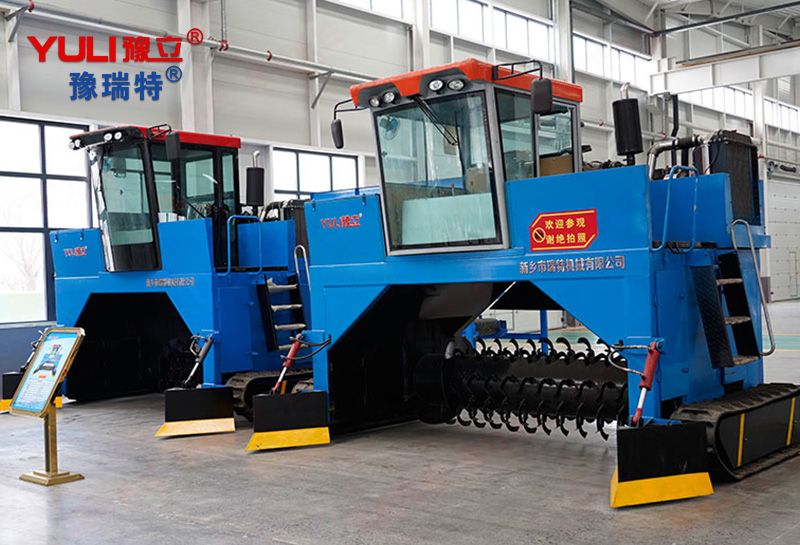
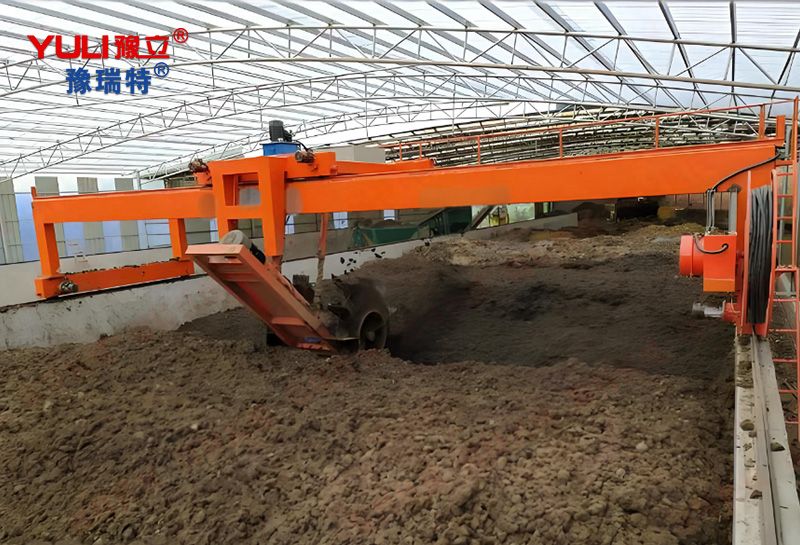
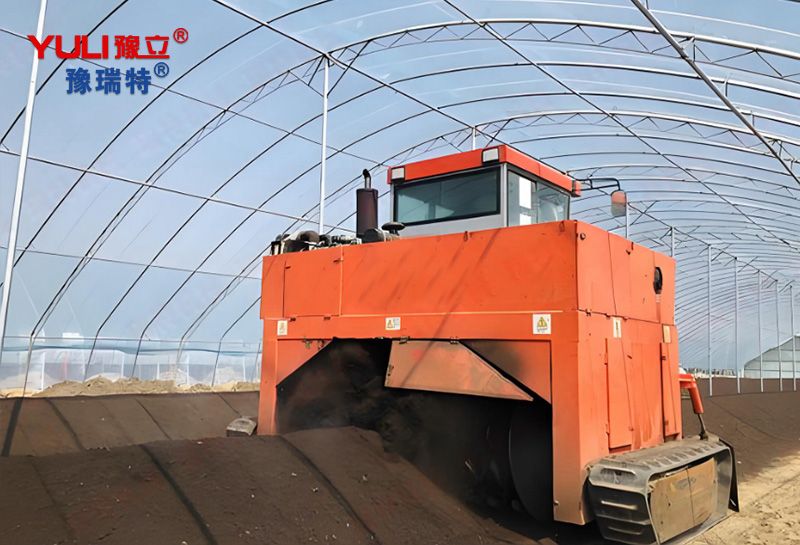
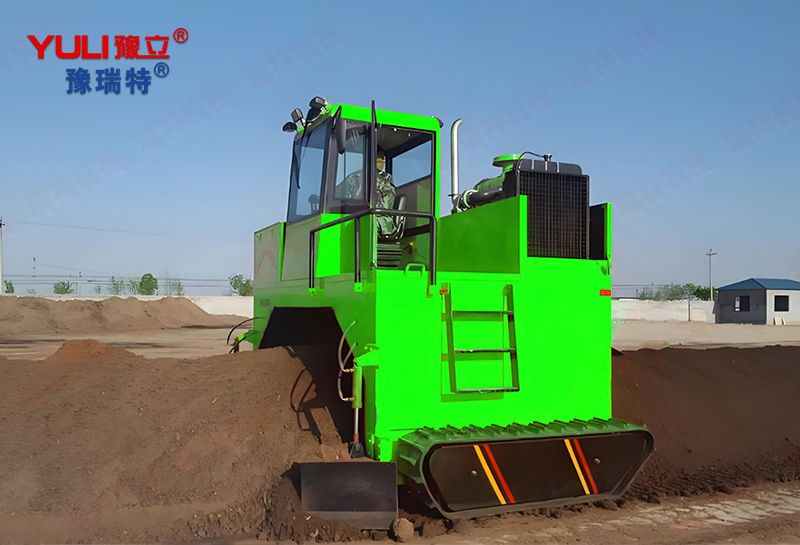
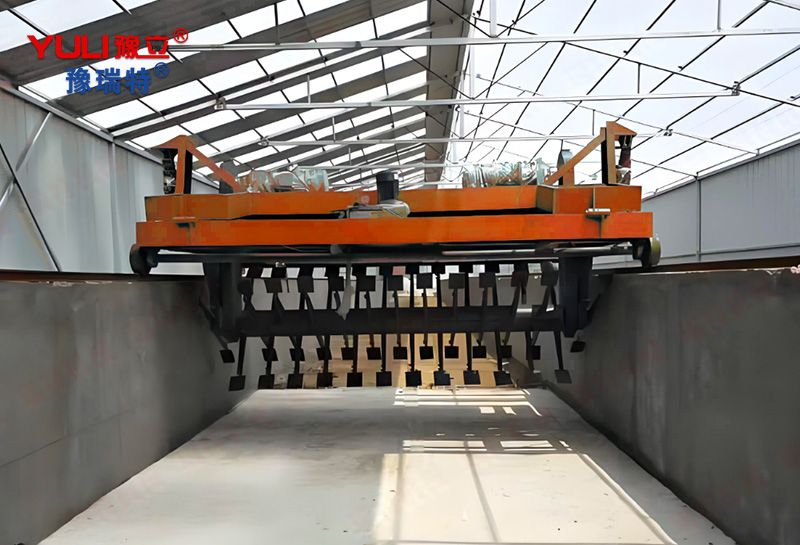
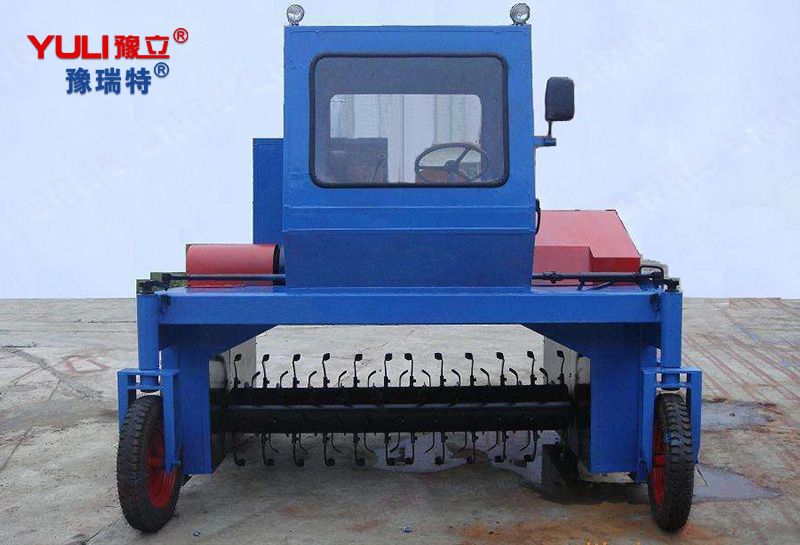
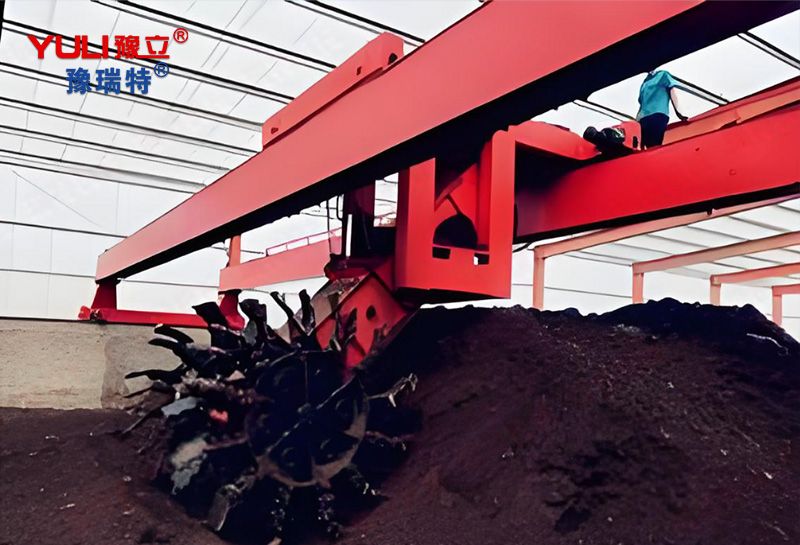
Double wheel disc flipping machine usually consists of one or more horizontally rotating "discs" or "wheels" equipped with multiple blades to form flipping components. When the machine moves forward, these rotating wheels "gnaw" and throw up materials, achieving flipping. It is commonly referred to as a "milling disc" or "rotating wheel" stacker.
1、 Main advantages and characteristics
Unique flipping principle, good mixing effect
Milling type flipping: The rotating disc "cuts" materials like a milling cutter, with strong ability to break and disperse materials, especially suitable for handling materials that are prone to clumping, have many fibers, and have high viscosity (such as straw, mushroom residue, and garden waste).
Evenly scattered: The material is picked up by the wheel blade and scattered backwards and upwards, forming a uniform parabolic shape, allowing the new and old materials, as well as the inner and outer layer materials, to be fully mixed and exchanged.
Strong adaptability to pile shape
Very suitable for processing wide and trapezoidal cross-section strip pile compost. Its working width can be flexibly adjusted by increasing or decreasing the number of wheels (commonly 3-8 meters or wider).
For situations where the shape of the pile is irregular or the pile height is large, it can also be effectively operated.
Relatively high power efficiency
The flipping resistance is mainly concentrated in the disc part in contact with the material, and compared to the track type that requires driving the entire drum, the energy consumption may be lower under specific working conditions.
The structure is relatively simple and the transmission is direct.
Flexible and adaptable to different environments
The vast majority of wheel type stackers are wheel driven (tractor towed or self-propelled), which can freely move and transition in open outdoor areas, making them very flexible.
There is no need to rely on fixed fermentation tanks like a trough type stacker, and the infrastructure investment is low.
Low requirement for ground flatness
Due to its stacking operation method and wheeled walking, only basic leveling and hardening of the ground (such as compacted soil and gravel ground) is required, without the need for expensive concrete troughs.
Relatively easy to maintain
The core component is the wheel assembly, which has an intuitive structure and makes blade replacement and maintenance relatively convenient.
2、 Limitations or Characteristics to Consider for Double Wheel Disc Flip Machine The distance of material scattering is limited, and the requirements for pile shape control are high
The throwing distance is not as far as some powerful drum type flipping machines, and after flipping, the stack needs to be reshaped (sometimes accompanied by a fabric machine or stacking machine).
The width and height of the stack should match the working width of the machine, otherwise the edge effect will be poor.
The challenge of handling high viscosity and flowable materials
Although it can handle viscous materials, if the material is too wet or sticky (such as pure sludge), it is easy to adhere to the wheel and frame and needs to be cleaned frequently.
Greatly affected by weather conditions
Outdoor work is severely affected by rainy and snowy weather. Working during the rainy season is difficult and may cause the site to become muddy.
Large footprint, weak environmental control
Strip composting requires large open spaces.
It is difficult to achieve precise temperature and odor control, and areas with high environmental requirements may require covering with film or working in greenhouses.
Relative processing capability (compared to slot type)
Although the single processing capacity is large, the fermentation cycle is usually longer than the forced ventilation trough process, and the processing efficiency per unit land area may be lower.
3、 The main application scenarios of the double wheel disc flipping machine
Farm and Livestock Farm: Processing mixed materials of livestock and poultry manure and straw to achieve on-site resource utilization of manure.
Landscaping and municipal departments: handling garden waste such as tree branches, fallen leaves, lawn mowing, etc.
Straw Recycling Center: Processing straw from crops such as rice, wheat, and corn.
Small and medium-sized organic fertilizer plants that are sensitive to infrastructure investment.
Core comparison with track type (groove type) stacker
| 特性 | 轮盘式(条垛式)翻堆机 | 履带式(槽式)翻堆机 |
|---|---|---|
| 工艺形式 | 条垛式(露天长条堆) | 槽式(在混凝土槽内) |
| 行走方式 | 轮式(牵引/自走)为主 | 履带式(在槽内轨道或地面行走) |
| 场地要求 | 露天平整场地,无需建槽 | 需建设固定发酵槽,基建成本高 |
| 机动性 | 极高,可自由转场 | 极低,固定或需重型运输 |
| 环境控制 | 差,受气候影响大 | 好,可在厂房内,易收集气体 |
| 处理物料 | 适合纤维多、易结块物料 | 适合高水分、高粘度物料(如污泥) |
| 自动化程度 | 较低,多为驾驶操作 | 高,易集成自动导航与监控 |
| 投资重 点 | 设备本身 | 设备 + 土建基础设施 |
The double wheel disc flipping machine is the core equipment of the strip pile composting process, and its biggest feature is flexibility, economy, and good crushing effect on fiber materials. It is very suitable for projects with vast sites, limited investment budgets, and materials mainly consisting of agricultural waste. It is a classic choice for achieving the harmless and resourceful treatment of medium and small-scale organic waste. But in scenarios with strict environmental requirements, the need to handle highly polluting materials (such as sludge), or the pursuit of highly industrialized continuous production, the trough crawler stacker has more advantages. The key to selection lies in determining the process route (stack vs. groove).
Mainly engaged in core products such as slatted board production lines and slatted board molds
Strong strength · Excellent equipment · Quality assurance · Customer first · Win-win cooperation
CONTACT:Manager Li 13523220009
TEL:0373-7774868
ADDRESS:South of the middle section of Weiqi Road, Xinxiang Economic and Technological Development Zone
 Follow us
LINK:
Xinxiang Ruite Machinery Co., Ltd ICP:豫ICP备10026059号-2
13523220009
扫一扫 关注我们