ABOUT US
Adhering to the spirit of "dedication and focus", we provide craftsmanship products and serve millions of users

HOME
ABOUT US
PRODUCTS
Case
plan
NEWS CENTER
contact us
CHINESE
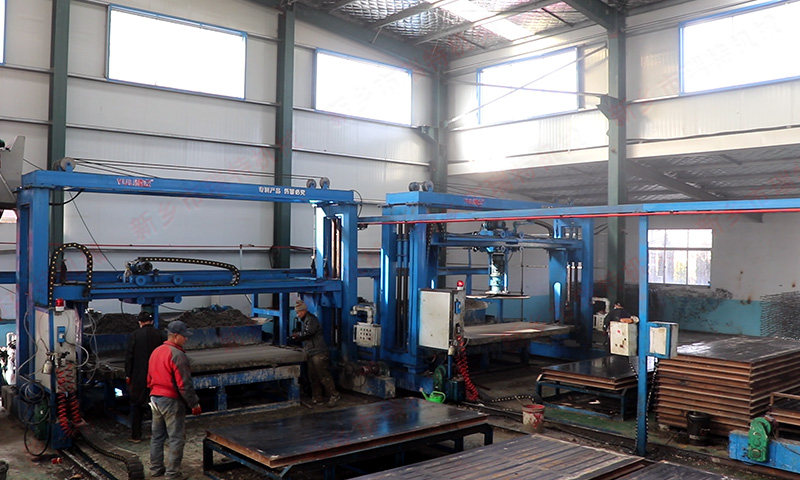
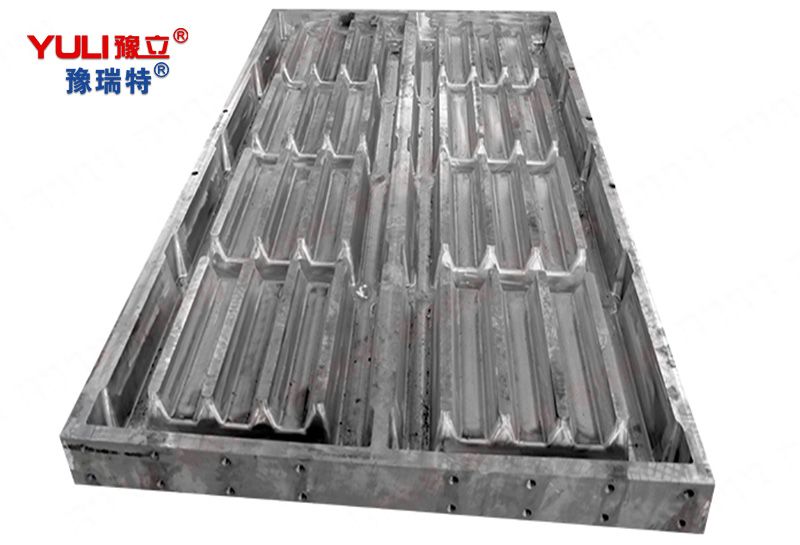
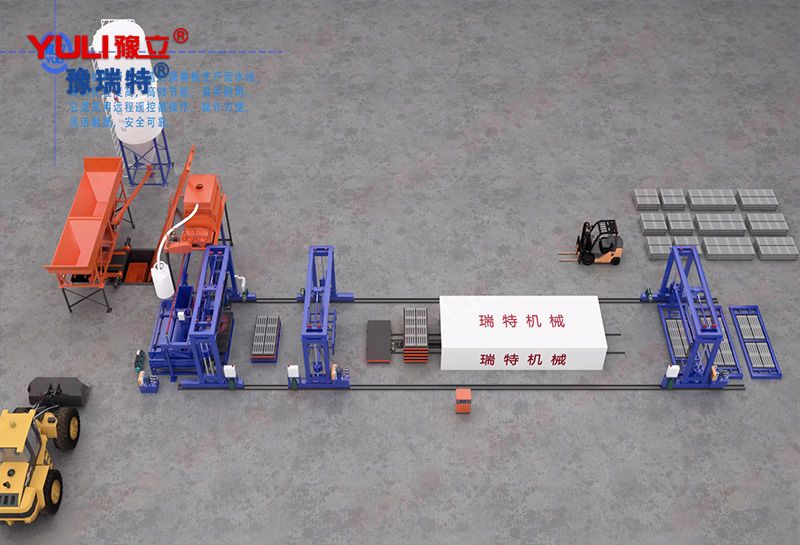
The fundamental reason is that the mechanism leakage plate production line is an industrialized system that pursues high efficiency, high quality, and large-scale continuous operation, and steel molds are the answer to meet all the demanding requirements of this system.
Simply put, the supporting steel molds are the core components for achieving automation, standardization, and efficient operation of the production line.
Below are several key dimensions to explain in detail why it must be "matching" and "steel":
Why must it be 'matching'?
The production line is a system, and the mold is a key link in the system that must be coordinated with all equipment.
Accurate matching of size and positioning: The mold must be perfectly matched with the interface size of the conveyor track, vibration table, flip demolding machine, stacker crane and other equipment on the production line to ensure smooth flow and precise positioning between various workstations.
Process matching: From concrete fabric, high-frequency vibration compaction, to steam curing, automated demolding, each link has specific requirements for the stress, fixing method, and thermal conductivity of the mold. The matching mold is tailor-made for the process flow of this production line.
Automation support: Modern production lines pursue "one click" operation. The mold needs to be designed with standard lifting points, flipping axes, and locking mechanisms so that the robotic arm or specialized equipment can automatically grasp, flip, and demold, reducing manual intervention.
Why must it be made of "steel"? (The irreplaceable advantage of steel molds)
a. Extremely high durability and lifespan
Wear resistant and impact resistant: The production of fecal leakage boards uses dry and hard concrete containing sand and gravel, which causes significant wear on the mold cavity under high-pressure vibration. The hardness, strength, and wear resistance of steel (usually Q235 or manganese plate) are much better than other materials (such as plastic, resin, or wood), and the service life of a high-quality steel mold can reach tens of thousands or even hundreds of thousands of times.
Resistance to deformation: Steel molds can maintain extremely high dimensional stability under long-term concrete lateral pressure, vibration force, and thermal expansion and contraction, without easily bending or deforming, ensuring product consistency.
b. Excellent dimensional accuracy and surface smoothness
Precision machining: Steel molds can be manufactured through CNC cutting, milling, and other methods to ensure precise and error free dimensions of each hole and reinforcing rib, with extremely small tolerances.
Smooth surface: The inner cavity of the mold has been polished or specially treated, making it very smooth. This makes demolding easy, and the surface of the finished fecal leakage board has high smoothness, smooth pores, and is not easy to accumulate dirt and grime, making it easy to clean. This is also a key indicator of high-quality fecal leakage boards.
c. Excellent demolding performance
The surface of steel can undergo special treatment (such as spraying release coatings such as Teflon) to further reduce the adhesion of concrete, achieve rapid and complete demolding, not only improve efficiency, but also reduce the rate of finished product damage.
d. Efficient thermal conductivity
The production line commonly uses "steam curing kilns" to accelerate concrete hardening and shorten the production cycle. The good thermal conductivity of steel enables molds and concrete to be heated quickly and evenly, greatly improving maintenance efficiency. This is incomparable to plastic or composite material molds.
e. Suitable for automation and mass production
Weight and strength balance: Steel provides sufficient strength while being relatively controllable in weight, making it easy for automated equipment to handle.
Maintainability: Even if there is local wear or damage, steel molds can be repaired by welding, grinding, etc., with relatively low maintenance costs and extended overall service life.
Why is it not possible to compare with other materials?
Plastic/composite material molds: not wear-resistant, short lifespan (may only be a few hundred times); Poor thermal conductivity affects maintenance efficiency; Low strength, easy to deform, difficult to ensure the accuracy of large-scale products; The initial cost may be low, but the overall single cost is much higher than that of steel molds.
Wooden mold: only suitable for extremely small quantities and handmade workshop production. Easy to absorb water and deform, size cannot be guaranteed, surface roughness, difficult demolding, extremely short lifespan, completely unable to adapt to the high-speed rhythm of automated production lines.
CONTACT:Manager Li 13523220009
TEL:0373-7774868
ADDRESS:South of the middle section of Weiqi Road, Xinxiang Economic and Technological Development Zone
 Follow us
LINK:
Xinxiang Ruite Machinery Co., Ltd ICP:豫ICP备10026059号-2
13523220009
扫一扫 关注我们